
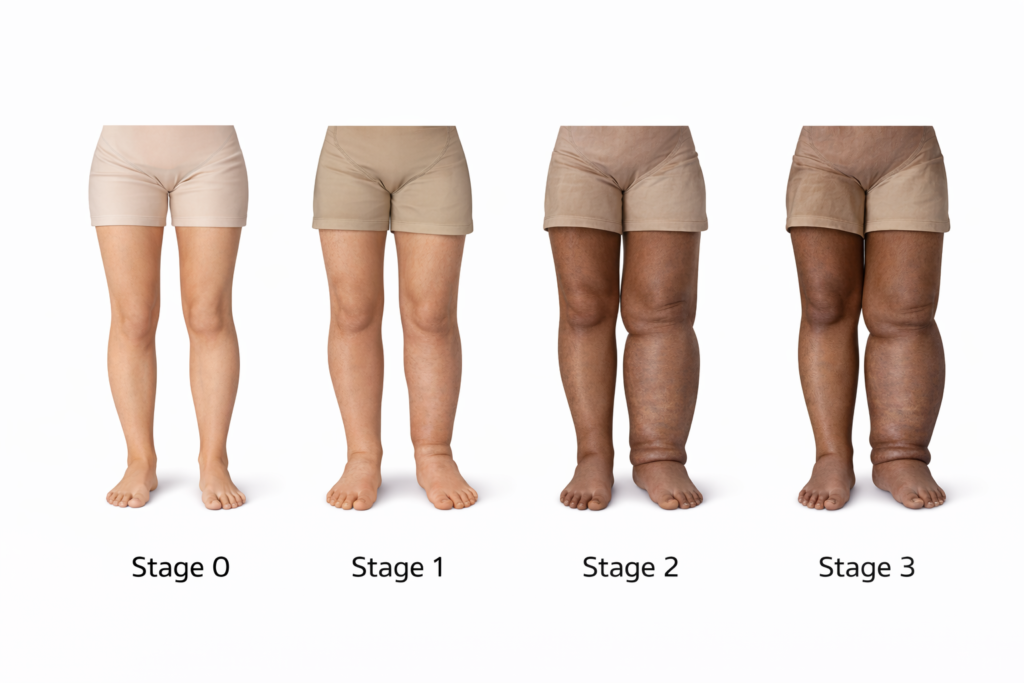
Lymphedema is a condition in which the lymphatic system is unable to effectively drain lymphatic fluid, leading to swelling and tissue changes. This overview outlines Stages 0 through 3 and helps patients recognize symptoms early so that timely intervention can be initiated.
Stage 0: Latent Stage (No Visible Swelling)
At this stage, the lymphatic system is impaired, but swelling is not yet visible.
Patients may experience:
-
Heaviness in the affected limb
-
Tightness
-
Mild discomfort
Early detection and monitoring at this stage are associated with the best long term outcomes.
Stage 1: Mild Swelling
Swelling becomes noticeable but may decrease with rest or overnight elevation.
Common signs include:
-
Puffiness in the ankles, feet, or legs
-
Soft, reversible swelling
-
Skin that pits easily when pressed
This stage is often highly responsive to conservative treatment.
Stage 2: Moderate Swelling (Non-Reversible)
Swelling becomes persistent and does not fully resolve with rest.
Patients may experience:
-
Fibrosis, resulting in firmer tissues
-
Thickening of the skin
-
A more pronounced size difference between limbs
Consistent clinical management is required to prevent further progression.
Stage 3: Severe Lymphedema
This advanced stage is characterized by significant limb enlargement and hardened, fibrotic tissue.
Symptoms may include:
-
Difficulty walking or wearing shoes
-
Increased risk of infections, including cellulitis
-
Pain, heaviness, and fatigue
Treatment and Care
Professional lymphatic therapy plays a critical role in reducing swelling, preventing complications, and restoring mobility. Early diagnosis and ongoing treatment can significantly improve function and quality of life.