
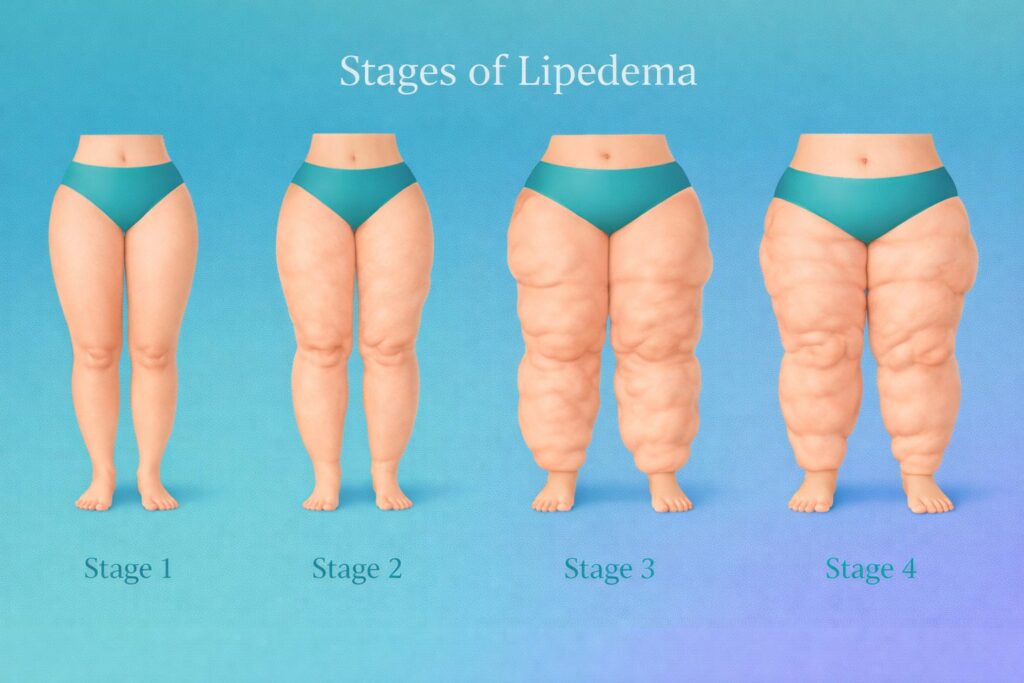
Lipedema is a chronic and often painful fat distribution disorder that primarily affects women. It is frequently misdiagnosed as obesity or lymphedema. Early identification is essential to slow disease progression and improve quality of life. The stages below describe how lipedema typically presents in the lower body.
Stage 1: Smooth Skin With Disproportionate Fat
In Stage 1, the skin surface remains smooth, but the lower body appears noticeably larger in proportion to the upper body.
Common symptoms include:
-
Heaviness in the legs
-
Tenderness or sensitivity to touch
-
Easy bruising
At this stage, lipedema is often overlooked, as outward changes are subtle.
Stage 2: Visible Texture Changes and Nodules
As lipedema progresses, changes in fat tissue texture become more apparent. The skin may appear uneven or dimpled, often described as mattress-like.
Patients may experience:
-
Painful fat deposits
-
Firm nodules beneath the skin
-
Increased swelling, especially after prolonged standing or walking
Stage 3: Large Lumps and Irregular Contours
Stage 3 is marked by significant structural changes in the legs. Fat deposits enlarge and become more irregular.
Typical features include:
-
Pronounced enlargement of the thighs and calves
-
Overhanging skin folds
-
Difficulty with walking, mobility, or finding properly fitting clothing
Stage 4: Lipedema With Lymphedema (Lipo-lymphedema)
This advanced stage involves both abnormal fat accumulation and impaired lymphatic drainage.
Symptoms may include:
-
Severe and persistent swelling
-
Hardening or thickening of tissues
-
Reduced mobility
-
Increased risk of skin infections
Management and Support
Early diagnosis and appropriate management can significantly reduce symptoms and slow progression. Treatment approaches may include manual lymphatic drainage, compression therapy, targeted exercise, and supportive lifestyle strategies.
We care and we are here to help. Speak with our expert clinicians today to learn more about personalized lipedema care. Contact us to schedule a consultation.